Practical 11

Session Limits That Survive a Losing Run

Play colour rounds

A limit only counts if it holds at the worst moment. That makes the mechanism more important than the intention, and it is why almost every limit set in the middle of a session fails.

Roundsnot minutes
Beforenot during
Accountstronger than resolve
Before you open the app

Five Decisions, in Order

All of them made while calm, which is the only condition under which they hold.

First

The amount

Decide it and treat it as already spent rather than as a float to protect. A budget you expect back is not a limit.

Second

The number of rounds

Not minutes. Rounds map directly onto turnover, and they cannot stretch to fit whatever is happening.

Third

The account-level deposit limit

If the operator offers one, set it now. A limit you cannot override at 1am is worth ten that you can.

Fourth

Saved payment methods

Remove them, so that a second deposit requires deliberate effort at exactly the point where friction helps.

Fifth

Write the two numbers down

Somewhere visible, before the first round rather than after the fifth.

Why minutes fail and rounds hold

An hour means twelve rounds on a five-minute table and a hundred and twenty on a thirty-second one. It also stretches: one more minute is always available, and it never feels like a decision.

A round count is a fixed quantity that ends visibly. Nothing about it depends on how the session is going.

Three kinds of limit

Ranked by How Well They Hold

The difference between them is entirely about who can override them and how easily.

Strongest Strongest

Account-level limits

Deposit caps and cooling-off periods set with the operator. They apply without your involvement and cannot be argued with at midnight.

Middling Middling

Payment-side friction

No saved cards, no autopay mandate, a separate wallet with a fixed balance. Each adds a step at the moment steps are useful.

Weakest Weakest

A private resolution

The one everybody uses. It works on ordinary evenings and is exactly the one that fails on the evening it matters.

What to check afterwards

Four Numbers at the End of a Session

None of them is the balance, which is the number everybody looks at.

Rounds played

Against the number you decided in advance. This is the honest measure of whether the limit held.

Count

Total staked

Rounds multiplied by stake. Usually several times larger than people expect.

Turnover

Largest single stake

If it is above your flat number, the session changed character somewhere.

Peak

Number of deposits

One was planned. Two means the plan ended at some point during the evening.

Deposits
Signals

Four Moments Worth Recognising

Each one is a decision point rather than a warning, and each is easier to act on if named in advance.

The round after your limit. The most expensive round available, because it is the one that establishes the limit is negotiable.

The second deposit. The first was made calmly. The second is almost always made under different conditions.

The first raised stake. A change in stake size mid-session is a change in plan, whether or not it was decided as one.

The extended session. If the round count has passed and you are still playing, the session is now open-ended and so is the cost.

Why Limits Are the Only Strategy Here

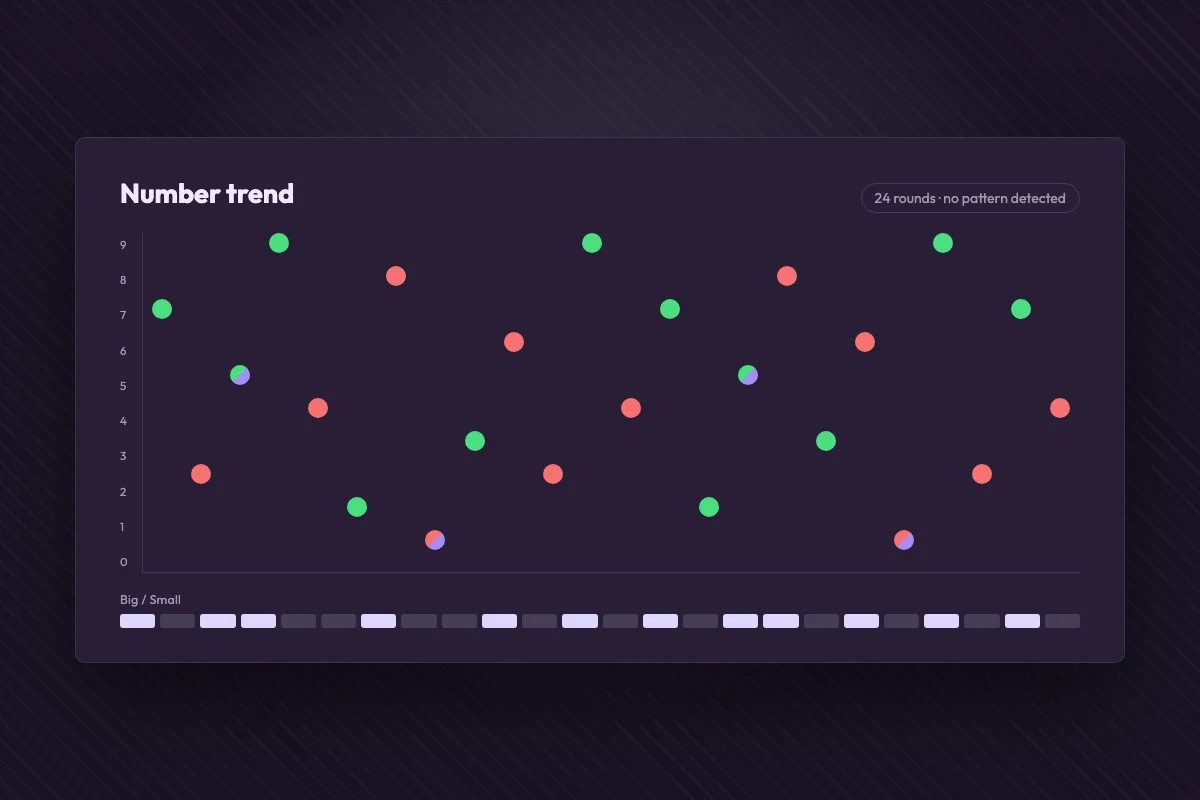
Because nothing else in this game is available to be improved. The odds are fixed, the digit is generated elsewhere, and no reading of the history changes the next round. What remains is how much money passes through the board and for how long — and both are set by limits rather than by skill.

That is an unglamorous answer, which is why the market around these rounds is full of more exciting ones. The exciting versions cost money; this one does not.

If a Limit Has Failed

Treat it as information rather than as a character verdict. A limit that failed was probably the weakest kind — a private resolution with no mechanism behind it. The response is a stronger mechanism next time: an account-level cap, no saved payment method, a round count written down.

The patterns worth noticing before that point are on the warning signs page, and every guide is listed on the home page.
FAQ

What is a good session limit?

+

One decided before you open the app, counted in rounds rather than minutes, and paired with an amount you treat as already spent.

Why count rounds instead of time?

+

Because an hour means twelve rounds on one table and a hundred and twenty on another, and because time stretches while a round count does not.

Do account-level deposit limits work?

+

They are the strongest option available, because they apply without your involvement and cannot be overridden in the moment. Set one on day one.

Should I set a win limit too?

+

A stopping point in either direction is easier to hold than one that only triggers on losses, and being ahead does not change what the next round will do.

What if I pass my limit?

+

Stop at that point rather than at a rounder number. The round after a passed limit is the one that establishes the limit was negotiable.

Number trend chart plotting the drawn digit across twenty-four consecutive rounds with no repeating pattern

This website is for informational purposes only and is not a gambling operator: we do not accept bets or payments. 18+. Gambling involves risk and may lead to addiction — please gamble responsibly. Information (bonuses/terms/licenses) may change: check current rules on the operator’s website. We are not responsible for decisions and financial losses related to the use of third-party services.