Systems 08

Doubling, Recovery and the Tail That Arrives

Play colour rounds

The oldest system in gambling, rediscovered weekly in this category. It works exactly as advertised for weeks at a time, which is the whole problem with it.

2xafter every loss
64xby the seventh
1evening that ends it
The ladder

Starting at ₹20, Doubling After Each Loss

Nothing unusual has happened by the bottom row. Seven consecutive losses is an ordinary event, not a bad night.

Loss 1

Recovery needs a single win, which is why it feels controlled.

₹40

Loss 3

Still comfortable. Most sessions never go past here, and that is why the system looks reliable.

₹160

Loss 5

Sixteen times the opening stake, chasing the original ₹20.

₹320

Loss 7

Sixty-four times the opening stake.

₹1,280

Loss 9

Two hundred and fifty-six times, if the table limit has not already stopped you.

₹5,120
What the system actually does

It converts many small wins into rare large losses. The average is unchanged; only the shape of the results moves, and it moves toward hiding the cost until one evening presents all of it at once.

Table limits make it worse rather than better: they cap the ladder at the exact moment continuing it was the only thing keeping the story intact.

Variants

Three Relatives of the Same Idea

All of them redistribute results rather than changing the expected cost.

Reverse Reverse

Doubling after wins

Feels safer because losses come from winnings. It produces the mirror shape: many small losses and rare large wins, at the same expected cost.

Fractional Fractional

Adding half after a loss

A gentler ladder that reaches its tail later. Later is not never, and the arithmetic is identical in direction.

Recovery targets Recovery targets

Bet until the day is level

The most dangerous version, because the stopping condition depends on results rather than on a decision made in advance.

What it changes

Shape, Not Expectation

Blocks illustrate how often each pattern ends a session in each state. The ordering is the point.

Flat stakeSmall wins, small losses, predictable cost
steady
DoublingMany small wins, rare very large loss
cliff
Reverse doublingMany small losses, rare large win
spiky
Recovery targetSession length decided by results
open-ended
If you want to test one

Four Rules for an Honest Test

It can be done in an evening with a notebook and no money at risk.

Use notional stakes. Write the ladder down rather than playing it. The number worth recording is the largest stake it reached.

Set the length in advance. A hundred rounds, ended at a hundred rounds. Stopping at a good moment is how these systems earn their reputation.

Log every round. Including the ones where the ladder was reset. Selective records are what make progressions look sound.

Compare against a flat stake. Same rounds, same calls, fixed stake. The two columns usually finish close, with one of them far more comfortable to have lived through.

Why It Survives Every Refutation

Because most of the evidence people have is genuine. A doubling ladder does recover small losses, most evenings, for weeks — and the person describing that is not exaggerating. The failure mode is rare by construction, which means the average player's direct experience of the system is positive right up until the session that is not.

It also externalises the failure neatly. When the ladder finally breaks, the story available is that the run was unusually bad or the table limit interfered, rather than that the tail was always part of the design.

The Honest Version of Recovery

There is not one. A loss already incurred does not change what the next round will do, and no staking pattern converts a negative expectation into a positive one. The only thing that changes is how the losses are distributed across evenings.

What a flat stake does instead is on the stake and bankroll page, and every guide is listed on the home page.
FAQ

Does the martingale system work in colour trading?

+

It recovers small losses reliably and loses very large amounts rarely. Over a long enough period the rare case arrives, and it arrives sooner than most players expect.

What about doubling only after two losses?

+

Same structure with the tail pushed further out. Delaying the ladder changes when the large loss happens, not whether it does.

Do table limits protect me?

+

They cap the ladder, which means the system fails at exactly the point where continuing was its only mechanism. They limit the damage rather than fixing the logic.

Is reverse martingale safer?

+

It is the mirror image: many small losses and rare large wins. The expected cost is the same and the experience is different.

What should I use instead?

+

A flat stake and a session length decided in rounds. It does not improve the odds, and it makes what an evening costs predictable.

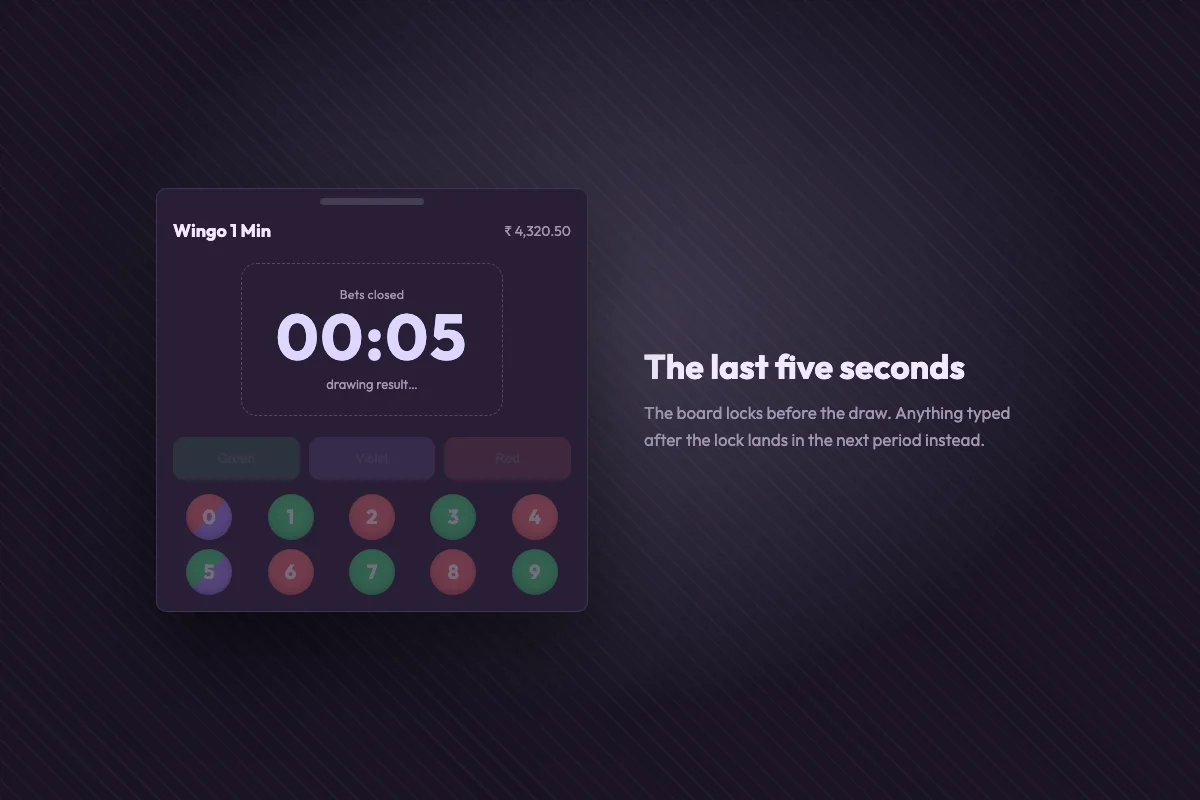
Game board locked five seconds before the draw, with the colour buttons greyed out

This website is for informational purposes only and is not a gambling operator: we do not accept bets or payments. 18+. Gambling involves risk and may lead to addiction — please gamble responsibly. Information (bonuses/terms/licenses) may change: check current rules on the operator’s website. We are not responsible for decisions and financial losses related to the use of third-party services.