Practical 15

A First Week, Written Out Day by Day

Play colour rounds

If you are going to try these rounds anyway, there is an order that costs the least and teaches the most. It starts with nothing at stake and ends with a decision made on your own numbers rather than on anybody's advice.

7days
₹0for the first three
1decision at the end
The week

Seven Days, in Order

Nothing here is urgent, and the sequence matters more than the pace.

Day 1

Open the demo, not the deposit

Learn the interface, the markets and where the settings live. Every mistimed press made here is free.

Day 2

Read the payout table

Coverage against multiplier for each market. Ten minutes, and it settles most of the questions people ask for months.

Day 3

Work out your hourly figure

What an evening of this is worth to you, divided by three per cent, divided by rounds per hour. That produces a stake.

Day 4

Deposit the minimum and verify

Complete KYC the same day. Set an account deposit limit while you are in the settings.

Day 5

Withdraw ₹500

Before playing seriously. This tests the exit while nothing is at stake emotionally.

Day 6

Play one planned session

Flat stake, fixed round count, one market. Write down the round count and the total staked afterwards.

Day 7

Look at the two numbers

Turnover and rounds played, against what you planned. That comparison is the only honest feedback available.

What the week is designed to produce

Not a strategy — there is none. A set of numbers that are yours: what an hour costs you, whether the operator pays, and whether the plan you made survived contact with a losing run.

Nobody else's review can give you those three answers, and all three are available for the price of one small deposit.

Three things to avoid

During That First Week

Each of them makes the week's answers unreliable.

Avoid Avoid

Accepting a bonus

It attaches a wagering requirement to the balance, which makes the withdrawal test ambiguous. Take offers later, if at all.

Avoid Avoid

Installing a predictor

It adds a permission list and a variable to a week whose purpose is to isolate what the game itself costs.

Avoid Avoid

Changing stake mid-session

It makes the turnover figure at the end of the week mean nothing, which is the number the whole exercise exists to produce.

At the end

Four Numbers Worth Having

Written down rather than remembered.

Turnover for the session

Stake multiplied by rounds. Usually several times larger than people expect.

₹

Rounds played against planned

The honest measure of whether the plan held.

Count

Time from withdrawal to payment

What the operator is actually like, measured rather than read about.

Hours

Largest single stake

If it exceeded the flat number, the session changed character somewhere.

₹
Afterwards

Four Ways the Week Can End

All four are legitimate outcomes, and the plan is not a commitment to keep playing.

You stop. The most common outcome once the hourly cost is written down, and an entirely reasonable one.

You keep the plan. Same stake, same round count, treated as an entertainment budget with a known price.

You slow the table down. The single cheapest adjustment available, and the one most people make after seeing their turnover.

You notice the plan did not hold. Which is worth more than any of the above, because it is information about the mechanism rather than the game.

Why the Order Matters

Because most of the expensive mistakes in this category happen in the first week, when the interface is unfamiliar, the bonus offer looks generous and nobody has yet tested whether the operator pays. Doing those three things in a deliberate sequence turns a week of guessing into a week of measurement, and it costs less than most people's first session.

It also front-loads the two checks nobody runs after the first month: the withdrawal test and the turnover calculation. Once a routine sets in, neither gets done.

What This Week Cannot Tell You

Whether you are ahead. Seven days is far too short a sample to say anything about results, and treating a good week as evidence of a working approach is the single most common misreading in this game. What the week measures is cost and process, both of which are stable, rather than outcome, which is not.

The logging sheet for that session is on the record-keeping page, and every guide is listed on the home page.
FAQ

Should I take the welcome bonus in the first week?

+

We would not. It attaches a wagering requirement to the balance and makes the withdrawal test ambiguous, which is the most useful check of the week.

How much should I deposit to start?

+

The minimum that supports one planned session. Anything more removes the friction that makes a second deposit a deliberate act.

Why withdraw before playing seriously?

+

Because it tells you what the operator is actually like at a moment when the answer costs nothing, and it clears verification while you are not waiting on it.

What if I win during the first week?

+

It says nothing about the approach. Seven days is far too short to measure results, which is why the week is built around cost and process instead.

Is a week long enough to learn the game?

+

There is very little to learn — the round has one decision and no skill component. A week is long enough to learn what it costs, which is the useful part.

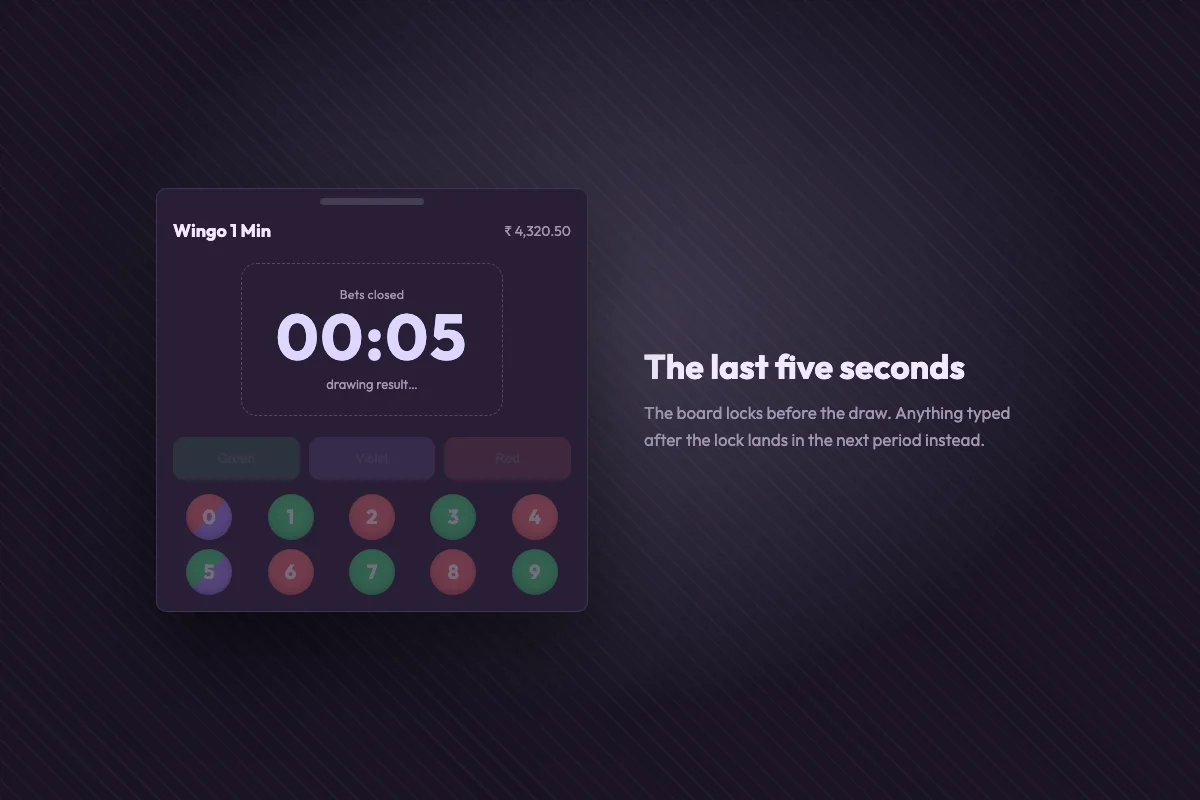
Game board locked five seconds before the draw, with the colour buttons greyed out

This website is for informational purposes only and is not a gambling operator: we do not accept bets or payments. 18+. Gambling involves risk and may lead to addiction — please gamble responsibly. Information (bonuses/terms/licenses) may change: check current rules on the operator’s website. We are not responsible for decisions and financial losses related to the use of third-party services.